by Simon Davies, former NRBO Warden
Large numbers of gulls and waders gather around the coast, feeding on the deep banks of washed-up seaweed. Among the Herring, Common and Great Black-backed Gulls, visitors from further north are often seen, with Iceland Gulls and Glaucous Gulls regular winter sightings.
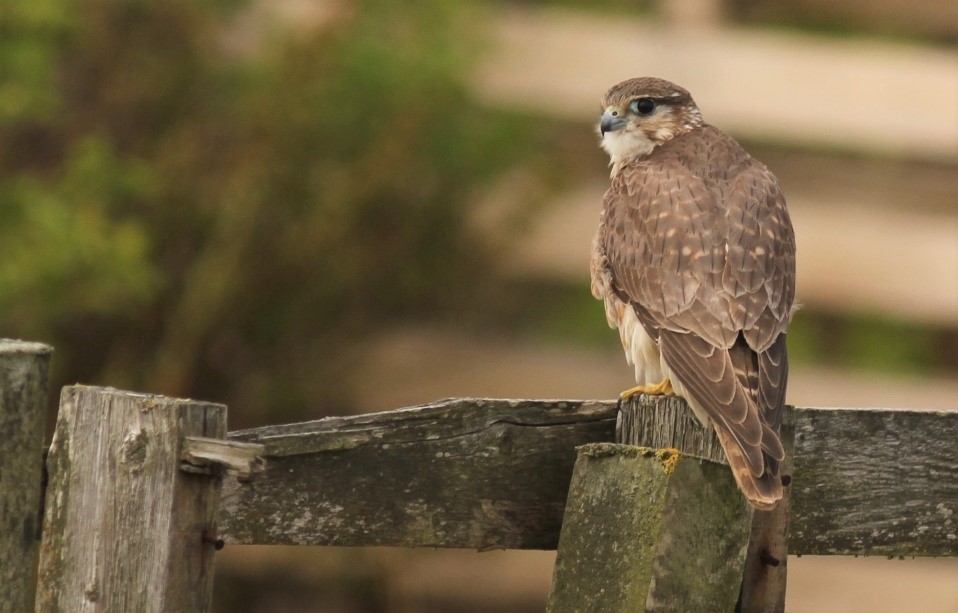
Along the shore, Turnstone, Purple Sandpiper and Sanderling are among the most common waders. In the fields, flocks of Golden Plover, Lapwing and Snipe feed through the winter months — often scattered suddenly by a passing Hen Harrier, Peregrine or Merlin (pictured below. photo by Simon Davies).
Winter Seabirds and Wildfowl
Offshore in winter, North Ronaldsay attracts good numbers of Great Northern Diver, Red-throated Diver, Long-tailed Duck, Red-breasted Merganser and auks. Careful searching can also produce scarcer species, including Black-throated Diver and Slavonian Grebe.
Across the island, the lochs hold a rich variety of ducks, geese and swans. Whooper Swan, Pintail, Shoveler, Wigeon, Gadwall and Teal are all present in good numbers, while patient scanning through the rafts of wildfowl can reveal more unusual visitors such as Smew, Green-winged Teal, Scaup or American Wigeon.
Winter Passerines
The winter months are generally quieter for passerines, but there is still plenty to see. Flocks of Snow Bunting move across the fields and shore, Rock Pipits forage along the beaches, and Hooded Crows and Ravens patrol the skies.
Large, swirling murmurations of Starlings can also be seen feeding around the seaweed, lifting suddenly in waves above the shore. If the winter has been mild, some autumn migrants may stay on and attempt to overwinter, including Redwing, Fieldfare, Robin and Twite.
Spring Migration
Spring on North Ronaldsay begins quietly. Species that are resident elsewhere in the UK often only reach this far north once the weather begins to improve. The first signs of the changing season are usually the arrival of Pied Wagtail, Linnet, Meadow Pipit and Chaffinch from late February into March.
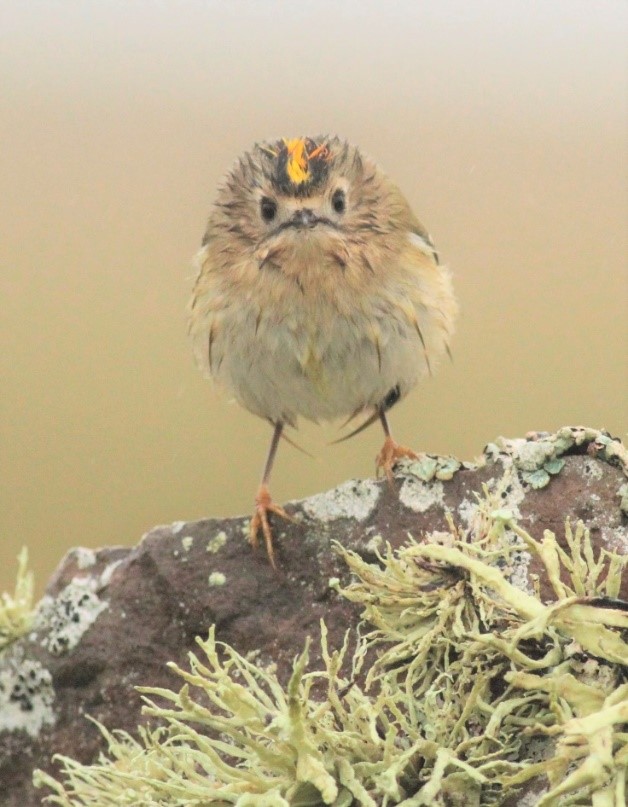
As March gives way to April, passerine migration increases. Species such as Grey Wagtail, Goldcrest (pictured top of page, photo: Simon Davies), Mistle Thrush, Chiffchaff, Black Redstart, Stonechat, Brambling, Siskin and Lapland Bunting begin to appear, alongside increasing numbers of gulls, ducks and waders either arriving to breed or using the island as a stepping stone on their onward journeys.
Spring Rarities
By April and May, birders’ thoughts naturally turn to rarities — and North Ronaldsay often delivers. The island’s outstanding recent record was the first British record of Red-winged Blackbird at the end of April 2017, a reminder that almost anything is possible here.
Other spring scarcities are more regular. White-billed Divers often appear towards the end of April, while May can bring classic Northern Isles species that are much rarer elsewhere in the UK, including Bluethroat, Red-backed Shrike, Common Rosefinch, Marsh Warbler, Wryneck and Red-breasted Flycatcher.
Peak Spring Birding
Because of North Ronaldsay’s position, the main spring passage tends to occur slightly later than in much of the UK. Mid-May to early June is often considered the best period for spring birding.
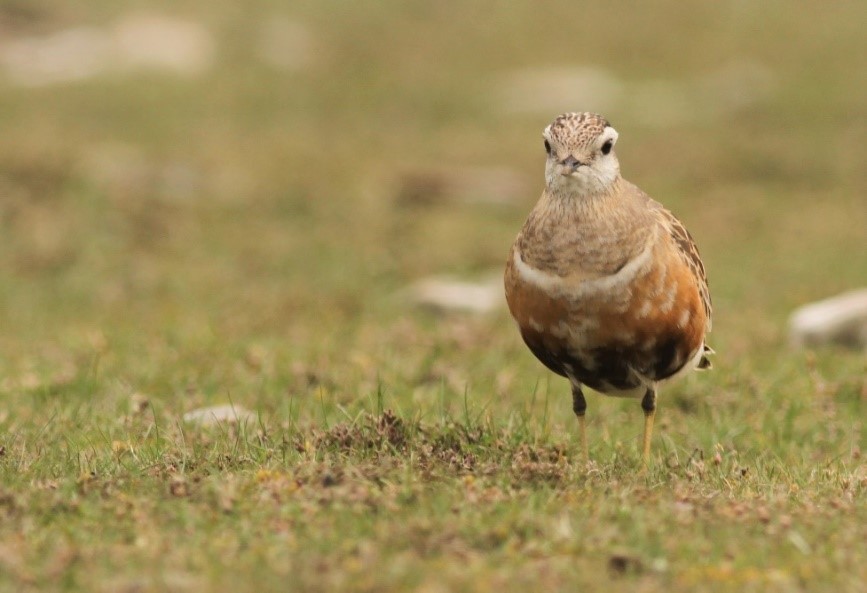
This is when the island sees many of its Cuckoos, Redstarts, Whinchats, Spotted Flycatchers, Pied Flycatchers, Tree Pipits and breeding warblers, as well as scarcer spring visitors such as Nightjar, Golden Oriole, Turtle Dove, Dotterel (see above, photo: Simon Davies) and Honey Buzzard.
Spring Waders
This period is also excellent for waders, many now in full breeding plumage. Hundreds of Knot, Turnstone, Sanderling, Purple Sandpiper and Dunlin gather on the seaweed banks around the shore.
A wider range of passage waders also appears, including species more often associated with freshwater habitats. Greenshank, Green Sandpiper, Common Sandpiper, Wood Sandpiper, Curlew Sandpiper and Little Stint may all pass through on their way north to breed above the Arctic Circle.
Breeding Birds
As spring migration fades, attention turns to the island’s breeding birds. The fields are full of nesting waders, with Oystercatcher, Curlew, Redshank, Lapwing and Snipe all competing to make the loudest protest if you get too close.
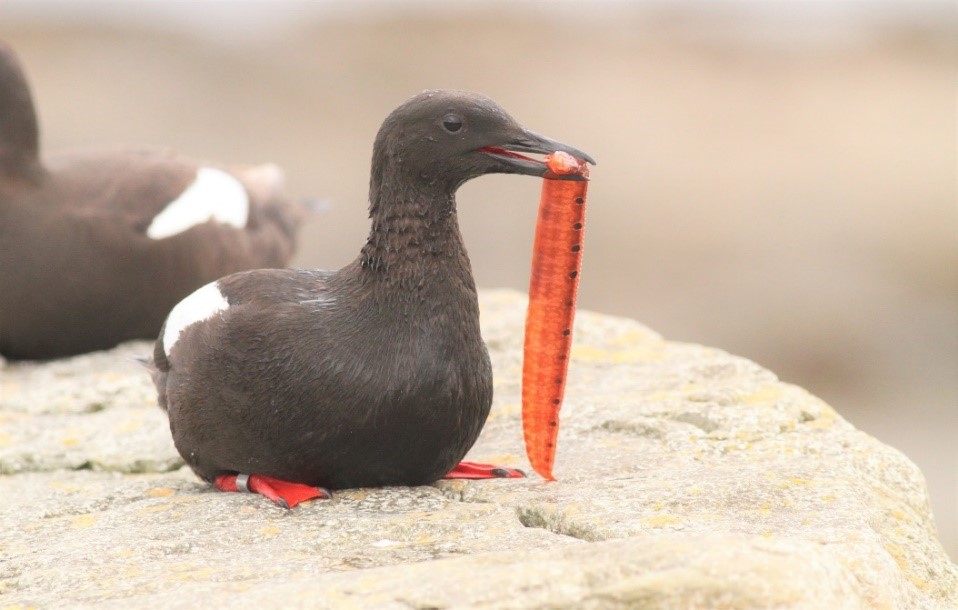
Around the coast, hundreds of Fulmars nest at the base of the sheep dyke, while Black Guillemots (pictured above, photo: Simon Davies) fill the air with their whistling display calls as they jostle for space on the boulder beaches. The island’s noisy Arctic Tern colonies are equally memorable — and will make it very clear when you are nearby.
Island Breeders
North Ronaldsay’s breeding passerines include Skylark, Wheatear, Wren, Blackbird, Meadow Pipit, Pied Wagtail, Sedge Warbler, Linnet, Twite and Reed Bunting. Abandoned crofts provide nesting sites for Swallows and Rock Doves.
Other breeding species include Great Skua, Arctic Skua, Black-headed Gull, Common Gull, Great Black-backed Gull and numerous Greylag Geese. The island’s lochs also support a range of ducks, including Mallard, Teal, Shoveler and Gadwall, with occasional Garganey, Wigeon and Pintail.
Return Passage
Before long, return passage begins. On North Ronaldsay there is often little gap between ornithological spring and autumn. By late June, the first returning waders are already heading south after breeding attempts further north.
Golden Plover, Whimbrel and Wood Sandpiper begin to appear in the fields and on the lochs. These early flocks can also bring rarer waders with them, and species such as Pacific Golden Plover, Pectoral Sandpiper and Buff-breasted Sandpiper have all appeared at this time of year.
Autumn Migration
Barring the odd surprise – and North Ronaldsay usually has a few! – passerine return migration begins in August. Birders look for high pressure over Scandinavia and easterly airflow across the North Sea, which can drift the first migrants towards the Northern Isles.
From this point on, North Ronaldsay comes into its own. Species that are much scarcer elsewhere in Britain appear here more regularly, including Barred Warbler, Wryneck, Icterine Warbler, Citrine Wagtail, Greenish Warbler and Booted Warbler. These become firmly fixed in birders’ minds as they search through often large numbers of common migrants.
Seawatching
Attention also turns offshore. North Ronaldsay’s position makes it ideal for seawatching, as birds moving through the North Sea on their way back to the Atlantic are naturally funnelled around the north end of the island.
Among regular Manx Shearwaters, Sooty Shearwaters and Storm Petrels, the island is perhaps one of the best places in Scotland to see sought-after seabirds such as Great Shearwater, Cory’s Shearwater and Fea’s Petrel. With the added possibility of Orcas and Risso’s Dolphins, there is always a reason to keep watching the sea.
Peak Autumn Birding
As autumn progresses, the sense of possibility grows. August and early September can be productive, but the final two weeks of September and the first week of October are generally considered the peak period for both numbers and variety of migrants.
Common migrants can be one of the most spectacular features of autumn. In the right conditions – north-easterly winds, drizzle and a new moon – tens of thousands of Redwings, Blackbirds, Fieldfares, Robins and Goldcrests may arrive from Scandinavia, creating a remarkable island-wide movement.
Autumn Rarities
The variety of autumn migration is impressive in itself. Regular highlights include Ring Ouzel, Yellow-browed Warbler, Long-eared Owl, Short-eared Owl, Woodcock, Jack Snipe and Sparrowhawk.
Annual rare vagrants can include Olive-backed Pipit, Little Bunting, Great Grey Shrike, Blyth’s Reed Warbler, Short-toed Lark, Richard’s Pipit, Arctic Redpoll and Pallas’s Warbler.
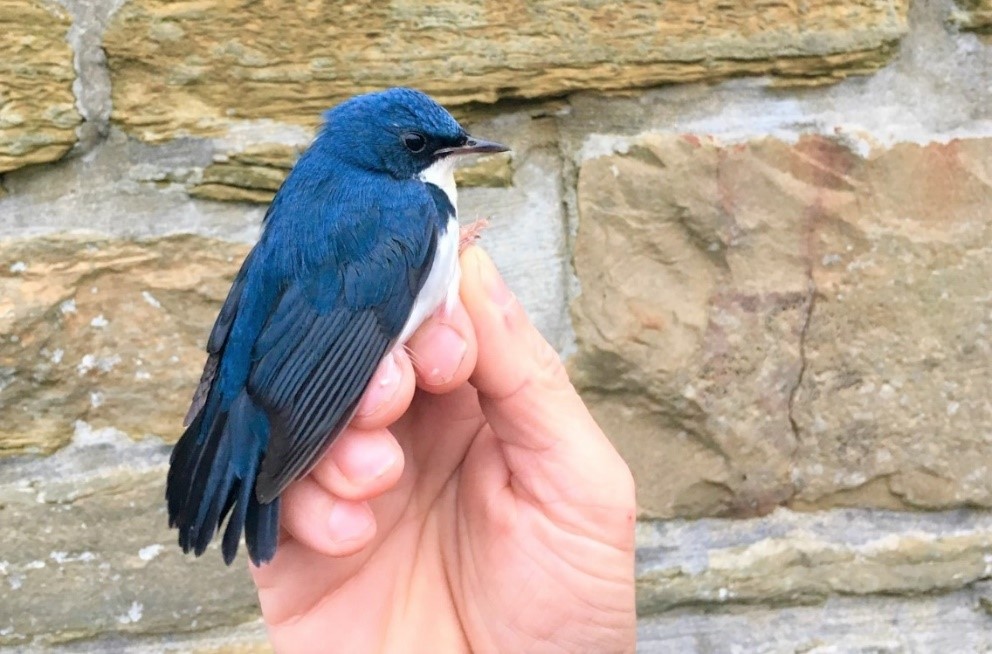
North Ronaldsay also has a reputation for producing genuinely exceptional rarities. Over the years, birds such as Siberian Blue Robin (pictured above, photo: Simon Lewis), Yellow-browed Bunting, Siberian Thrush, Eyebrowed Thrush and Black-billed Cuckoo have drawn visiting birders to the island, sometimes arriving by private plane in pursuit of the latest extraordinary sighting.
Winter Returns
And so the island comes full circle. As the nights draw in once more, Little Auks begin to appear offshore, while Iceland Gulls and Glaucous Gulls venture south from the Arctic among storm-driven flocks of gulls and waders.
Across the island, Snow Buntings once again flit over the fields and shore, marking the return of winter birding on North Ronaldsay.