The Old Beacon
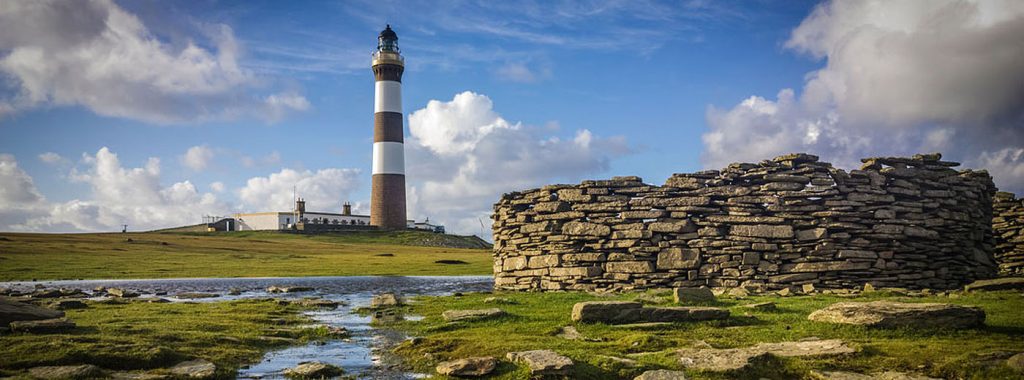
At Dennis Head, on the north-eastern edge of North Ronaldsay, stand two remarkable landmarks in Scotland’s lighthouse history: the Old Beacon and the later North Ronaldsay Lighthouse.
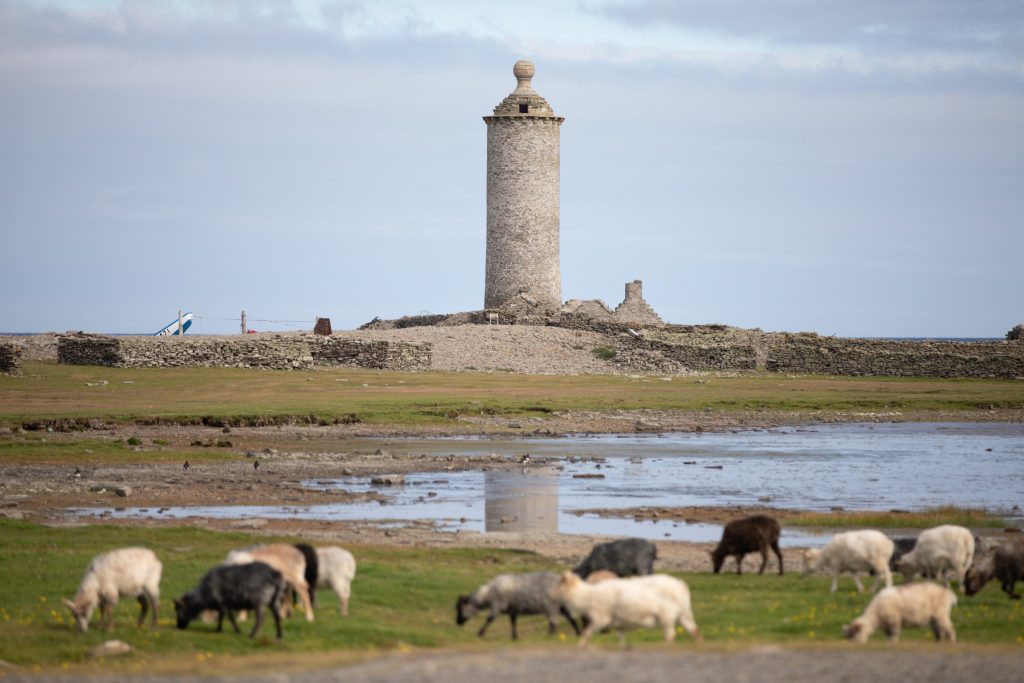
The Old Beacon was first lit on 10 October 1789. Built for the Commissioners of Northern Lighthouses, it is regarded as the earliest surviving purpose-built lighthouse tower in Scotland. The 70-foot tower was constructed from local, undressed stone, with materials and workmen brought from Leith. The masons were John White and James Sinclair, and the total cost is recorded as £199 12s 6d.
The light was engineered by Thomas Smith, with assistance from his stepson Robert Stevenson, who went on to found the famous Stevenson dynasty of lighthouse engineers. The Old Beacon used an oil-burning reflector system, advanced for its time, with lamps and polished reflectors designed to strengthen and direct the light out to sea.
After the lighthouse at Start Point was built in 1806, the Old Beacon’s light was no longer required and was extinguished. Today, the tower and the remains of the keepers’ houses survive as an evocative reminder of the early years of lighthouse engineering in Orkney.
The New Lighthouse
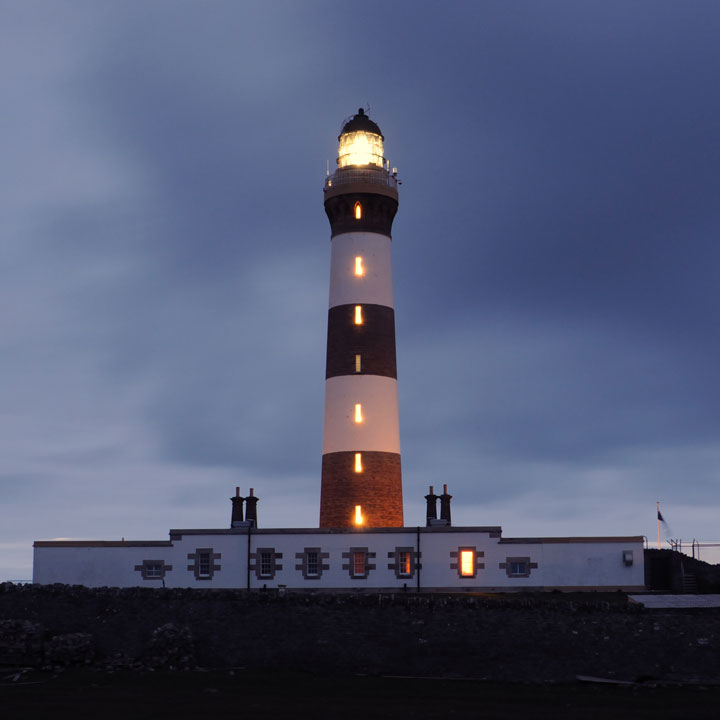
The New Lighthouse
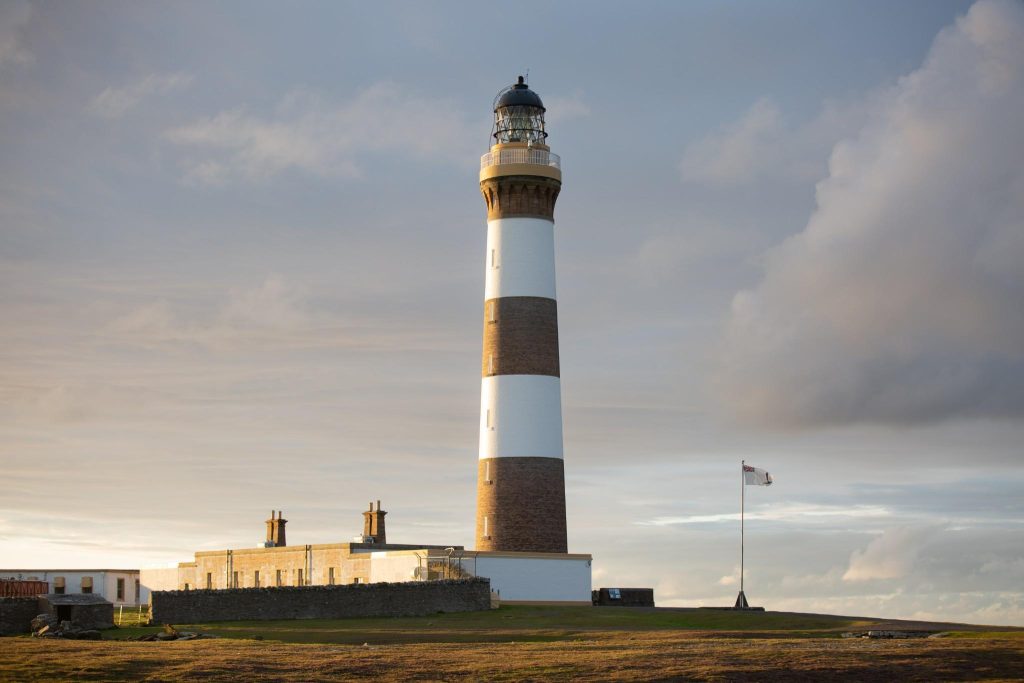
By the mid-19th century, a stronger light was needed to give better warning of the dangerous waters around North Ronaldsay, including the reefs and skerries off the island. The new North Ronaldsay Lighthouse was established in 1854 and designed by Alan Stevenson.
Originally, an iron tower was considered, but concerns about wind vibration led to the decision to build in brick. The contract went to William Kinghorn of Leith, who first had to construct a half-mile stone jetty, with help from local residents, so that materials could be landed for the build.
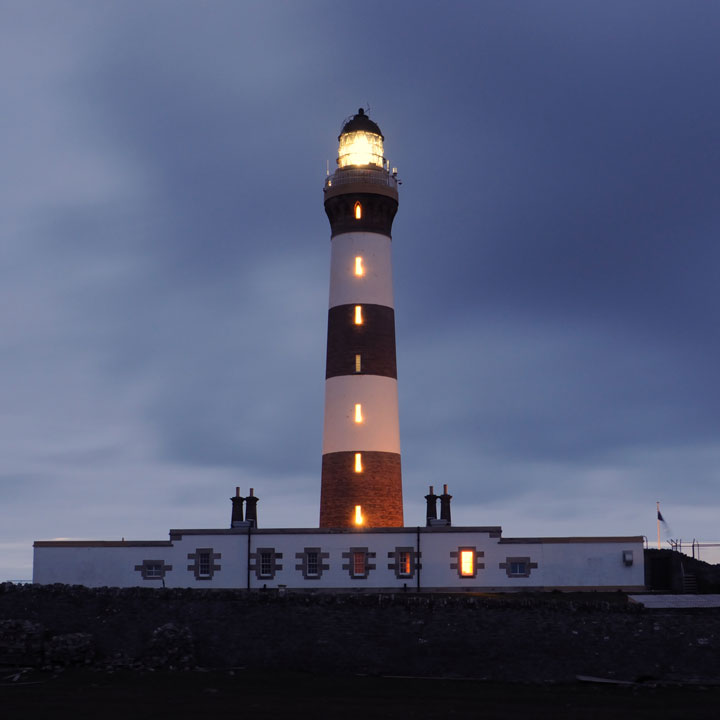
Standing 139 feet / 42 metres high, North Ronaldsay Lighthouse is the tallest land-based lighthouse in the British Isles. Its light has a range of 24 nautical miles and flashes white every 10 seconds. The tower still contains its original Fresnel lens, named after the French inventor Augustin-Jean Fresnel, whose lens design transformed lighthouse illumination.
Visitors can tour the lighthouse and, on a clear day, enjoy outstanding views across the island and the surrounding seas, with Orkney to the south and Fair Isle and Shetland to the north. The climb involves 176 steps, so suitable footwear is recommended, and visitors should be comfortable with stairs, heights and enclosed spaces before attempting the ascent.
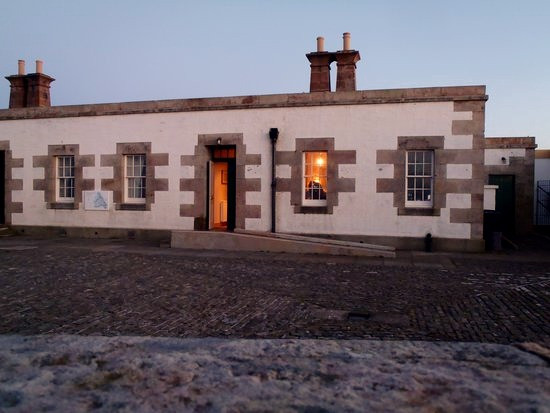
Stay at the Lighthouse Keepers’ Cottages.